
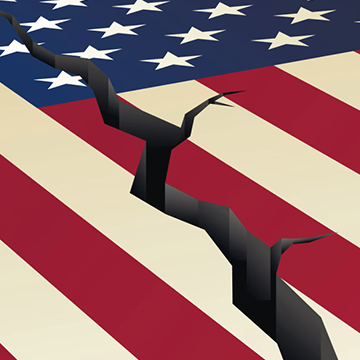
The Role of Empathy in Bridging America’s Political Divide
In recent years, the American political landscape has become increasingly divided, with opinions growing more polarized and extreme. As tensions rise between political parties, social groups, and everyday citizens, it becomes more evident that the fabric of unity that once held the country together is fraying. However, there is one powerful tool that has the potential to heal this divide and restore meaningful discourse: empathy.
Empathy is often misunderstood as simply feeling sorry for someone else. However, true empathy goes much deeper—it’s about understanding and sharing another person’s feelings and perspectives. In an era when political discussions are often dominated by name-calling, misinformation, and the vilification of opposing viewpoints, empathy provides a path toward reconciliation and understanding.
The Growing Divide
The United States is experiencing one of the most significant periods of political polarization in its history. With each passing election cycle, it appears that the gap between political ideologies is widening, leading to increased distrust and division among Americans. Whether it’s issues like healthcare, immigration, or climate change, people seem entrenched in their views, unwilling even to entertain the possibility of agreement with the “other side.” This divide has affected not just politics but social relationships, families, and communities. Conversations about politics have become so fraught with tension that people are avoiding them altogether or, worse, cutting ties with those whose views differ from their own.
As this polarization deepens, the need for empathy becomes increasingly critical. But can empathy truly serve as a solution to such deep-rooted divisions? The answer is yes—when practiced thoughtfully and intentionally, empathy can be a powerful tool in bridging this divide and healing the wounds that separate us.
Empathy as a Bridge
Empathy allows us to see the world through another person’s eyes. In the context of political discourse, this means understanding why someone holds the views they do, even if we disagree with them. It’s about moving beyond stereotypes and judgments to recognize the human experiences that shape each individual’s perspective.
Take, for example, the contentious issue of healthcare. For someone who supports universal healthcare, the problem may stem from a profound belief in human dignity and the right to health as a fundamental need. On the other hand, someone opposing such policies might have concerns about the efficiency of government-run systems or the potential for increased taxes. Instead of demonizing each other, both sides can use empathy to understand better each other’s fears, hopes, and values. By fostering this understanding, it becomes easier to engage in constructive conversations that can lead to mutually beneficial solutions.
Empathy isn’t just about recognizing another person’s point of view—it’s also about acknowledging the emotional components that drive their beliefs. Many people’s political stances are influenced by personal experiences or struggles they have faced in their lives. Perhaps someone who advocates for stricter immigration policies has experienced economic hardship and fears job loss. On the other hand, someone fighting for immigrant rights may have personal connections to those who have faced injustices due to immigration laws. Empathy allows us to see the human beings behind the policies and understand why they hold certain beliefs, even when those beliefs seem at odds with our own.
The Role of Empathy in Healing
Empathy’s healing power lies in its ability to create a human connection. In a divided society, we tend to view political adversaries as “other,” which perpetuates the notion that we are fundamentally different from one another. Empathy challenges this perception, enabling us to find common ground even with those with whom we disagree.
In America today, political parties often operate within echo chambers, where individuals primarily interact with like-minded people, thereby reinforcing their views and excluding opposing perspectives. Empathy, however, invites us to step outside our comfort zones and engage with those who think differently. It doesn’t require abandoning our beliefs, but it encourages us to recognize the shared humanity in those with whom we disagree.
One example of how empathy can heal political polarization is through conversations. When we engage in discussions to understand, rather than to argue or “win,” it opens up opportunities for collaboration and compromise. These conversations don’t have to be grand or monumental—they can start with small acts of listening, asking questions, and showing respect for others’ experiences. It’s through these small moments of empathy that we can begin to mend the divides that have formed over the years.
Moreover, empathy can help us challenge our biases and assumptions. We all have preconceived notions, often shaped by our environment, media, and upbringing. Empathy forces us to question these assumptions and approach others with an open mind, rather than a hardened heart. This shift in perspective makes it easier to see the validity in opposing viewpoints and opens the door to more productive dialogue.
Empathy in Leadership
The role of empathy is particularly crucial in leadership. Political leaders, in particular, hold significant influence over how their constituents perceive each other and their own political beliefs. Unfortunately, many leaders today have capitalized on division, often using inflammatory rhetoric to gain support by vilifying their opponents. This approach only deepens the divide, making it harder for people to come together.
Empathy, on the other hand, can serve as a guiding principle for leaders who seek to unite rather than divide. Leaders who practice empathy can listen to the concerns of their citizens, even when those concerns conflict with their own beliefs. This willingness to engage with the struggles of others can help create policies that reflect a broader spectrum of society’s needs, fostering an environment of inclusivity and cooperation.
Leaders who lead with empathy can set a powerful example for the nation. By showing empathy in their interactions with others, they encourage citizens to do the same. When leaders demonstrate that it’s possible to engage in civil discourse without resorting to vitriol or division, it sends a clear message that empathy is a necessary part of public life.
Moving Forward with Empathy
So, how do we begin to incorporate empathy into our daily lives? It starts with small, intentional actions. We must actively listen to those with whom we disagree, seek to understand their experiences, and remain open to seeing the world from their perspective. It also means acknowledging our own biases and being willing to unlearn harmful stereotypes and assumptions.
Empathy doesn’t solve all problems, but it does provide a foundation for dialogue, understanding, and collaboration. In a time when America’s political divide seems insurmountable, empathy offers hope that, through connection and compassion, we can begin to bridge the gaps that separate us.
In conclusion, if we are to heal the political polarization in America, empathy must be at the heart of our efforts. By understanding the emotions, experiences, and values that drive others’ beliefs, we can foster greater understanding and cooperation across political lines. It’s time to replace divisive rhetoric with empathetic engagement—and in doing so, we can work toward a more unified and compassionate society.